Pages

Showing posts with label Reading. Show all posts

Friday, 6 October 2017

Books in native languages

 Now, I am not really sure what the current correct term is for someones mother tongue, or father tongue for that matter, the language which they hear round and about them when they are born, the one that they grow up speaking, or the ones that they grow up speaking if they are fortunate enough to be brought up in a bi-lingual household. There is considerable research around that says to be fully literate you must first be securely literate in your birth language. Once you have cracked it in one language it makes it much easier to be literate in another. I have just read "Lion", the story of Saroo Brierly and one of the things in the book that shocked me was his illiteracy at the age of 5. Because of his circumstances although he was able to speak, he never really learnt any vocabulary meaning that he could not communicate with people to explain that he was lost.

I personally feel rather cheated by life. I was certainly securely literate in English, the language that everyone spoke around me, and I developed a full, rich vocabulary full of description, metaphor, poetry because I come from the South Wales Valleys and the socialist background of Chapel, where creativity, education and learning were the guiding principles of life. So no problem there. But, Welsh was not spoken, the road signs were not bilingual at the time. There were no Welsh playgroups, or nurseries and Welsh was not an exam subject in School, so I missed out on the chance of being bi-lingual and knowing more Welsh than being able to sing the Welsh national Anthem or Welsh Hymns or Nursery Rhymes. It would have been great if I could have had some children's books in Welsh to develop literacy in Welsh.

Perhaps that is why I am a bit concerned about the charitable ventures that send books off to overseas places. Are they killing off minority languages by flooding the place with books in English? It is also why I am really pleased when I come across ventures like this mobile library for refugees in Greece, because they have a collection of books in the languages of the refugees.

Now I am not so sure about this venture. Although it shows compassion and generosity of the people of Norfolk, it doesn't really say whether the books are in English it implies that they are, as the bus it to be converted into a mobile library for the Ivory Coast and will be "like an English resource centre in Adibjan". According to Wikipedia, Adibjan, the largest city of the Ivory Coast, is French speaking. I may be getting this out of context, as the organiser is from the Ivory Coast herself. Maybe there is a desire to learn English in the Ivory Coast and this is just a resource to help that. It way well be a way of making sure that the literate children of the Ivory Coast become literate in more than one language.

Summer now gone, but the memories remain


I always loved the school summer holdiays, as a child and as an adult when I had children of my own. It is 6 glorious weeks when children are running amok and pestering their bored and irritable parents. Well, that is what I used to do, but that was way before computers and the Internet and interactive gaming meant that you played Monopoly with your friends. Sometimes you could stretch a game out for days!! (you had to have a friend with parents that didn't mind their dining table being occupied for that long).

It is far more likely that children today will settle down in a corner and sink into the Internet with one or more mobile device. However, you can drag them outside, make them walk somewhere,take them to run in the park or go on a bus or in a car to your local library. Many blog posts ago I talked about the Summer Reading Challenge. My field work started one year at the time of the Summer Reading Challenge and ended at the same time the following year. So, today the Summer Reading Challenge begins. Each year the Reading Agency develops this initiative to make sure that children's reading levels are kept up while they are not at school. Children that sign up have to read at least 6 books from their local library where they will also receive various rewards. There is a theme each year, and this time it is "Animal Agents".

Many libraries hold special themed sessions and there are colouring and activity sheets to give out. I have been looking through my archive of Google Alerts again, and I found that in 2014 the children of Sarn and Bridgend fought a dragon, paraded through the town and inspected a Fire Engine as part of that year's challenge. A detailed account can be found here.

Some libraries take the chance of the Summer Reading Challenge to engage young people to help out with their activities. This means that children from 5 -12 years and 13 - 18 years can be gainfully occupied. At the CILIP conference this year I found out what Bolton Libraries do with their Summer Reading Challenge volunteer workforce. They have proper training work with younger children on craft activities, this year they are being trained to do storytelling, and they too are rewarded, frequently with pizza! They are trusted and respected and given real choices on the way that the volunteer team operates. For example, when the scheme was set up the young people decided that they should be called "Imaginators", because they were there to help children stimulate their imagination.

I heard a young man speak about his experience as a volunteer. He is at the stage of having applied for university and found that having been an Imaginator for a number of years he was able to add his experience and skills to his CV. He felt that it gave him an "edge" over other candidates. He is going to study History, but he feels that at some point he would like to get back into the library and information world. He is no longer a volunteer at the library, because the library now employ him in a Saturday job.

I found this quite inspiring. I think that Bolton Libraries are taking exactly the right approach to volunteers. They are not just a cheap substitute for full time staff, they are not there just to pad out numbers, they are there to be educated, socialised into the world of work and to gain experience that they can use for the rest of their life.

Friday, 23 June 2017

Some are good, some are dubious

I have been looking back over my collection of Google Alerts again to weed out the interesting articles from the gathered emails of schedules of bookmobile of mobile library routes. I considered whether there was any historical reason why I should save the schedules and from a big data point of view, that may be interesting, but I decided against it, think that if they are still on the net from 2013, then they should be there if anyone wanted to do a heat map of the mobile libraries driving across the USA.

I did come across some interesting articles two of which are rather unusual and one just cheerful. I also came across some news items of mobile libraries closing, or being under threat. Together they show that although there are very good things happening with Mobile Libraries there are also bad things and sometimes people's motives may be a bit dubious. There are a lot of thoughts in that sentence, so lets take them one at a time, starting with the bad things.

 Bad things

Mobile Libraries, and specialist children's mobile libraries (CMLs), are easy targets for budgetary cuts. When I traced the history of CMLs I spotted the pattern of them popping up like mushrooms at various times, living for a number of short years, then, just like mushrooms disappearing for a while, sometimes to reappear after several years when another grant was available. In the UK over the past few years there has been enormous pressure on local authority funding and libraries have taken the full thrust of savings. So in 2013/2014 I found a number of articles about threats to mobile libraries in rural locations which were considered a life line to the local communities. I am not sure whether the mobile library services were actually cut in the end, something to pursue another day.

The UK was not the only country where mobile libraries have closed and isolated or minority communities are the hardest hit. I found an article about one in the USA which had been running for over 50 years, and had many visitors from Amish communities and one from Canada too.

I thought that I had found a good article when I saw the heading "Peace Corps Brings Bookmobile to Isolated Georgian Communities", from the Philadelphia News. It refers to Georgia the country between Turkey and Russia, not the US state of that name. I am not including the URL because the site is full of adverts, some of a dubious nature. I am sure that you can find it if you google it. However, I have my doubts about the ethics of that particular bookmobile:
  • The vehicle is a converted school bus from the US - What is wrong with using local vehicles?
  • It is operated by the US Embassy
  • Although targeted to the youth in the settlements, it "promotes American Culture" - What is wrong with Georgian culture?
  • The books are in English
Now, I believe that the Embassy and the Peace Corps consider that they are doing a good thing for those youth, and learning about other countries is a good thing, but if you are trying to engage displaced young people and help the disadvantaged then  at least start with what they know, their own language and culture. I just get the uneasy feeling that this bookmobile may be more about propaganda that altruism.

Good things

The first good thing, to counter library closures, here is a library opening.This is an example of a service that paused until money was found to start it again. The community is rightly proud of bringing back a service that will mainly serve schools, but will then visit other parts of the community.

The second good thing is a bicycle mobile service. Now, I am sure that you have heard of them before, but this one is not in Peru, or Cambodia, but in Arcata, California.


The project, as it was in 2014, was the idea of university teacher and bicycle enthusiast Melanie Williams who is combining her passions of teaching, literacy and cycling. All the books have a cycling theme and she explains her reasons for doing this in her interview with the local radio station. Part of the interview is about the Book Mobile and the latter part about her work in promoting cycling. If you have 15 minutes to spare it is well worth listening to what she says.

Wednesday, 25 June 2014

Looking at my collection of Bookmobile and Children's Mobile Library Alerts

It may seem that I have totally abandoned children's mobile libraries and have switched camp to Open Access, and certainly the Full Time Job gets in the way of doing just what I want to do, but amongst the intellectual bother of writing papers, applying for permanent jobs and not getting them and keeping OpenDOAR (www.opendoar.org) as up to date as I can, I am still gathering as much information as I can about children's mobile libraries. Here is a link to an article in an American local paper about a mobile library that was axed and has been re-instated. Strictly it is a general bookmobile, but the staff comment about the importance of reaching out to children, amongst other groups that are hard to get into a static library. The staff feel that running the library is worthwhile if it gets children reading.

http://magicvalley.com/news/local/twin-falls-library-brings-back-bookmobile/article_c31456bb-14ce-5890-b3e9-61f4ba7bb390.html

Here is another example of an American bookmobile bringing books, excitement and literature and literacy to children as this Author/Attorney remembers.

http://patriciareding.booklikes.com/post/564126/the-bookmobile-is-here-

It does make me wonder whether she would just be an attorney if she had not had her imagination stretched by the visit of the bookmobile.

Just for good measure today, here is a link to another blog about the potted history of bookmobiles across America. I have added it here as somewhere safe to keep it!

http://www.hyperorg.com/blogger/2013/10/09/derek-attig-on-the-history-of-bookmobiles/

I will write some more posts when I have finished trudging through my accumulation of alerts and picked out the best ones.

Wednesday, 9 October 2013

CMLs as an Educational Resource

This post explains another of my PhD Theories. I named it the theory of Resource, or Specialist Resource and it goes like this: "The highly specialist nature of its collections makes a CML a reliable source of literature and information." Well, obvious really. I expressed it slightly better in a previous wording of the theory "A children's mobile library is a source of expertise that is drawn upon by children's educators and carers to enhance their own skills and knowledge". Basically, a CML is an educational resource. I sorted the types of resource into three piles, Goods- the stock items of the CML, Human Resource- the CML operators and the Educational Environment- the general atmosphere found in a CML. Today I will deal with the goods, the physical items that individuals can borrow.

Firstly, the sort of things that I found inside CMLs were children's books, audio books on CDs, video tapes of children's films, book packs that included toys, and books for adults about childcare and teaching children. The items were chosen in different ways in the various library authorities, commonly by a middle manager or stock control team who may or may not consult the CML operators about which titles or genre to choose. I have already said a lot about that in my post on best practice. It may not surprise you that vehicles where the operators could influence what was on board had the most appropriate stock for their customers. Overall I found a wide variety of of book genre, style, subject and ability level, from board books to history books or  graphic novels to poetry, which meant that a child could find something relevant to their ability and personal taste.

I was surprised by the number of times that children told me that the thing that they likes best about the CML they visited, was the books. They said that they could find "the books that I like", which could be the latest range of Flower Fairy novels or books about trains. Meeting the diversity of children's needs is a way of getting them motivated to read, and offering them a large quantity to chose from means that they do not get bored with the selection. Interest increases motivation. I also found it really surprising that a CML can be the means of a vital supply of books to avid readers, children so highly motivated and skilled at reading that neither schools not parents can financially keep up with the high level of book consumption. CMLs are a godsend to the voracious reader. The more children read, the greater is their skill increased. The wide variety of books on a CML therefore contributes to reading motivation and therefore to better literacy.

Some of the children also explained to me that the books helped them "know more about things". The children were learning to become self motivated learners, they were gaining the competency of teaching themselves about stuff in which they were really interested. It is not easy to gather that particular skill in an environment that offers a limited learning opportunity, a classroom where the needs of an entire class must be considered in a lesson plan. It wasn't only the children who learnt things from the books; adults borrowed the children's books as well, to refresh their memory about certain facts before teaching a topic, or used the childcare books to help them deal with certain situations, like helping a child through bereavement. Adults also borrowed books to use as classroom resources, or as a guide to a craft activity to do together with the children.It is actually quite important that children see adults taking an interest in books because it demonstrates to a child that books are valued, valid and fun.

There is a diagram to add here, but it is on my old laptop which will need finding and leaving for a while as it installs updates, so I will add it some other time.

So, CMLs are a source of a broad range of children's books which can be tapped into by children, teachers, carers, parents, grandparents to learn about the things that interest them. This increases their learning, no matter what age they are. Adults can pass on their learning to children and be role-models for the power of learning though reading.


Wednesday, 2 October 2013

These remind me of my UK Children's Mobile Library experiences


I apologise for the predominance of adverts in the Sylva Herald and the request to subscribe, but I felt that the link to the article is worthwhile. The Reading Rover that is featured, reminded me of some of the CMLs that I visited when I was doing the PhD, going to some outlying places, traveler camps, special schools, children's secure units, all places where it is hard for children to find books, Internet and information. 

http://www.thesylvaherald.com/news/article_93fe4866-2adc-11e3-afd1-0019bb30f31a.html

When I read the title, though,I thought that by Bogarts they meant the mythical creature, but that is spelled with two g's. 

The photograph of the children sitting on the floor in this CML reminds me of my time aboard the Reading Rocket. Although we had some seating at the back of the vehicle, when you had a class of thirty five year olds, or a batch of toddlers and their mums, it was the adults that sat on the seats, and the children spilled out all over the floor. 


I used to sit on the floor too, to read the stories, because I wanted to be on the same level as the children. It was easier for them to see the pictures in the books if I was at their height. If you read my previous post, you would realise that I am, in fact, closer to their height. I am a little concerned that the west (eg, Europe) is imposing their culture onto Thai children, but then I thought How magical it would be if a mobile library full of Thai fairy stories and books came around the UK, and I realised that reading Brothers Grimm tales would be just as exotic to Thai children as a Thai CML would be to ours. 

I am similarly concerned about the cultural ethics of this CML project, asking for donations of books in English. I really think that children's books should be published in a child's native language and traditional tales. This would boost literacy, bolster cultures and promote a local publishing industry.


Once again there is a "However ..." because in the day job I have come across many African academic web sites, and the main language appears to be English, I suppose because it is a common language between different African dialects. English is also a global academic language, so maybe it is good for Children to be learning English. On the other hand, it is just as vital that children are well educated in their native tongue. Why am I so concerned about this? Because I was brought up as an English speaking Welsh woman, and although I have the vaguest smattering of Welsh I cannot go back to my own country for a job because I am not bi-lingual.   


Monday, 29 October 2012

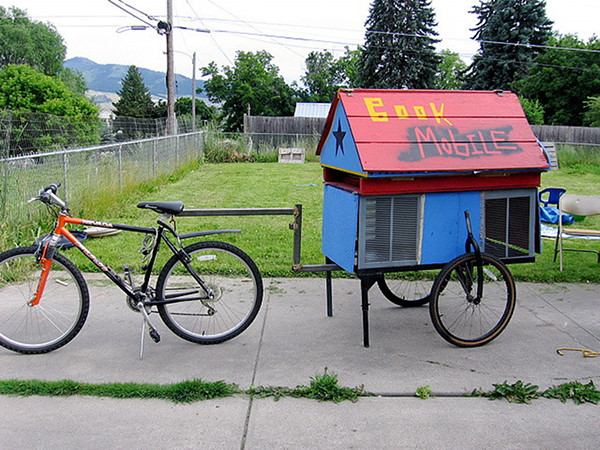
Bright Star Mobile Library: an example of a little vehicle

I have recently come across people who have a narrow concept of a Mobile Library, thinking that they are all large, expensive vehicles, but that is not the case. Here is an example of small, but perfectly formed, and very effective mobile libraries


Bright Star Mobile Library – Give2Asia

Friday, 5 October 2012

Thoughts on a Good Book

It is perhaps ironic that I am having thoughts about books on National Poetry Day, but then poems are published in books, so maybe it it a relevant sort of post to do. (This was started yesterday, but finished today). I was recently invited for a job interview, which makes a bit of a change, most of my job applications are resulting in nothing except a curt "Sorry, we have too many applicants and we are not shortlisting you" sort of reply. Sadly, I didn't get the job, but I suspect that I was not the sort of person that they were looking for. For instance, the first question I was asked was "Is there such a thing as a Bad Book", and I have been thinking over that concept ever since the interview. I suspect that although the question was open, allowing the interviewers find out more about each applicant, they were looking for someone who would tell them what was a bad book. 

As a trained librarian, a teacher of children with Special Educational Needs, and further more as a Doctor of Philosophy, I had to answer that "no, there is no such thing as a bad book". I went on the explain that even the Argos catalogue may inspire some children to make the first steps in reading, in order to decipher the strange symbols to which some people add sounds. Any book is good if it can prompt literate behaviour. When I came home I thought about what I really should have said (and the alternative reply certainly wouldn't have got me the job anyway).

A book is an inanimate object and can neither be good, nor bad, because it does not have a sense of morality. A book just is. You can say that a book is written badly, or contains concepts that are considered immoral (bad) by a certain society, but that is the fault of the author, not the book. A book may be interpreted in a certain way and cause a bad effect. One that springs to mind is Salman Rushdie's Satanic Verses. On the other hand, a book can have a positive influence on people, for example The Ragged Trousered Philanthropists by Robert Tressel, which  described the injustices done to the working classes. It appears to have been a book that inspired many a socialist politician. Of course, if you are not socialist, then you many have a different point of view about the book.

Which leads nicely to the thought that books are simple objects that hold a quantity of words. The words were put there from the mind of a person (or if co-authored, the minds of persons!) who used the words to describe the ideas that their imagination produced. these ideas are someway linked to the author's experiences, either real or researched for the book. The reader, however, interprets the words in their own way, according to what ever experience they may have.  A close friend of mine, who we will call Edith, relates a tale about a book the she bought for her sister.  Edith bought it because she had read it and had enjoyed the story of the relationships of the main characters. The sister read the book and passed it to their mother who also read it. When the three of them got together, and talked about the characters they found out that they each had a different idea of the what the characters looked like and the nature of the relationships. Edith commented "IT was like we had read completely different books". The act of reading a book engenders feelings inside the reader which they interpret as "bad" or "good"; the book itself is neutral.

Other aspects can influence the readers opinion. The print is too small to read easily, not enough pictures, too many pictures. It may be too large to hold or too small and fiddly to turn pages. The smell may be objectionable, it may have come from the home of a smoker, and smell appallingly of cigarette smoke to a non-smoker. Some people do not like handling a well used second hand book, because they think that it is dirty. A crisp new volume may smell and feel delightful. A book, after all is tactile and sensory experience and all humans differ in the sensory experiences that they like or dislike. In other words, for any book as an object, there will be people who describe it as good, or bad.

So, I have just had a thought, maybe the interview question should have been interpreted as my personal opinion of a bad book, and I should have listed the points that I do not like in a book. this would have given the interview panel an idea of my personality. However, I am a trained librarian, and teacher and a Doctor of Philosophy, therefore I know that my petty prejudices about a certain book or author does not give me the right to dictate those feelings to other people and censor their reading. It is for those others to decide for themselves. Whatever are the feelings, a book is merely a book and words are just words, quality and morality is supplied by readers.   

Wednesday, 4 April 2012

Doom day

Well, I started this blog to be a story of my research about children's mobile libraries in the UK, and in recent months I have only been adding links about interesting children's mobiles I have found in other parts of the world. That is because all the research has been culminating to today. It is the day of my Viva Voce, my "Oral examination" when I will find out if the research and thesis will be accepted to be good enough for a doctorate. I have been looking forward to this and being scared by this. I have just done a check on websites of the various children's mobile libraries that I visited, and I am a bit sad because at least another two have disappeared, which leaves only half of the ones where I did observations. My moral dilemma is should I have published my work sooner? or have the CMLs just got too expensive to run because of the rising cost of fuel?

It really is time to have another search through local authority websites to check how many CMLs there are in total, but I won't manage to achieve that by 2pm today (that's the time of the viva). So, don't think that this blog is coming to an end, just because I have finished one journey doesn't mean that I won't start another, and more importantly, now after the work has been marked I can say more about what happened on the journey. I am planning to write case studies of each vehicle where I conducted observations, those will have to be anonymous, of course. I can tell you general stuff about all the CML's that I could find, even the ones that have gone, let this blog be an archive of their work. I will also put up my findings and diagrams I drew to understand the information that I found.

I am also writing a paper about storytelling on CMLs and I will report on that and subsequent papers. I really did gather enough information to keep me going for years. (But I do need a job now, so if anyone has a spare one out there, I would be grateful!) Anyway, to keep my list of CMLs up to date, it would be good if anyone out there could tell me if they know of a CML that is still operating in their area, or if any new ones are planned. If the reverse is happening, and if anyone knows of a CML closing down, then I will be more than happy to offer my services as an expert witness to the value of using a CML.

Oh, in case you are in doubt, I did prove that CMLs do spread literacy and a love of books.

Friday, 29 July 2011

Thesis written

Well, the thesis is currently in University waiting for my supervisor to read and tell me what is wrong about it! My journey, I hope, is almost over, although I will write up more about my findings once the PhD has been passed. I particularly enjoyed doing the field work and feel very privileged to have met some interesting people with stories to tell about their experiences of children's mobile libraries. I was welcomed at each vehicle that I visited and I was quite enchanted by the actions of many of the children, I feel I saw some special moments in children's lives. More about that another time.

Overall, I found out that children's mobile libraries (CMLs) do pass on a love of books and reading to children, but not in the way that I thought they would. I thought that children's mobile library staff (I have been calling them operators) would need to have an in depth knowledge of literacy and working with children, and each vehicle would have to have lots of story times and active teaching, but that is far from the case. If you are a CML operator, you will scoff at me, you will say that you knew you were helping children's literacy and changing children's lives. Yes, many of you did tell me that. I can now prove that you do.

Children's mobile libraries work because they are a vehicle that comes and disappears again. that makes children (and staff) excited, which opens the brain to learning experiences. On the vehicle, there are books, books and more books, or posters about books, or toys of book characters, or recordings of books, or someone reading a book to you, with the occasional computer for children to play with. Basically, once you have entered the realm of a CML you cannot escape from words. This space of words is controlled by the operators, who tease you, cajole you, ask you about the book you have picked up, wants to know if you enjoyed a story, they make friends with you and talk about books. They let you choose what ever book you want, perhaps with a quick check in case you get in trouble at home for choosing a certain subject. Operators help children being literate by being enthusiastic and encouraging, not by being pedantic and disparaging. Children's mobile libraries work because they are fun ... and children like them.

I will leave this post with two photo's, a before and an after. The before, on the left, is a Children's Mobile Library. The after, on the right, is what it has become. I am sad about such a wasted opportunity.


Thursday, 4 February 2010

Leicester book buses


Well here are a pair of book buses! Today I went to see some very nice people from Leicester city libraries children's team, who manage the Leicester book buses. I managed to look over the vehicles while they were back in the depot for lunch. The under-fives BookBus tours settings in the city with a specific driver-library assistant and a children's team member, telling stories and issuing books. The children's BookBus focuses on area's of the city where the need to improve literacy is greatest. this means that although the timetable is fixed, it changes from time to time, when it has done its job in one area, most of their clients also going to a static library, and there is more need or no provision in another.

During the morning it does promotional visits to schools in those areas, to tell stories and talk about library membership. It rests in early afternoon to come out again between 3pm and 7pm to stop in the streets so that children can use it. They both stock mainly fiction, with just a little non fiction. It also attends community festivals and council events. The service has been continuous for the past 30 years, so as far as I can tell, it is the oldest continuous service in Britain. They have worn out three lots of vehicles in that time. Tell me, anyone, if their service has been going for longer!

Wednesday, 9 December 2009

Thinking aloud

Over the past six months, instead of getting down to do proper work I have had to write up a "First Year Report", which is really not a report at all, but a "Literature Review", which I find really frustrating. I am a doer more than a thinker although I do think about what I do! The position in which I now find myself is that because of the reading, writing process, having to justify the reason for investigating children's mobile libraries, of fitting the research into government policies, of finding out one thing and suggesting another, I have been thinking around in circles and not really progressed.

I have done a deal with my supervisors, who wanted me and my "hippy, touchy-feely" methodology to produce a "Literature Review". There is nothing, by the way, about the way reading is promoted on a children's mobile library. I have compromised to do a set of headings outlining what the literature review will be when I do one at the end of the data gathering and analysis. In fact, I will do an annotated set of headings, saying what would be, or is likely to be, in that literature review. As I look at what I have done so far so much seems irrelevant , so much seems to have been imposed by suggestions form the supervisors, who have their pet ideas. I am sure that they are only trying to help, but I think I would have liked more input on the how to do it, rather than the what to do.

So, what happens on a children's mobile library, and why does it matter? It matters because they are a service to communities, they introduce children to literature, some who would not otherwise go into a library. They offer a service to nurseries and early years settings to increase the number of books available to children and staff. They offer a library service, free of charge, to schools where individual children can find books or other information about things that they like. They are a free source of reading material to children who read avidly. They offer fun and interest and freedom of choice. Library services that have children's mobile libraries claim all these things, but is that what happens? Could they be better? Can they do a better job?

Most of all the service matters to the children that use it. I have also thought of the research as producing a sort of handbook of "Best Practice". Will this be good enough justification for my supervisors?

Thursday, 3 December 2009

Stuff about reading

Having the first year viva over and done with, I am now concentrating on books about reading, so that I can analyse the actions of people in Children's mobile libraries to work out if they are promoting reading. I have also discovered that I need to use page numbers in the citation, so that is why there will be odd numbers appearing in the text.

The first book is "Measuring reading abilities: concepts, sources and applications" by Peter D Pumfrey, Hodder and Stoughton, London, 1977.

On page 2 he talks about the statistical measurement of reading ability. "Figures can be used as a smoke screen to obscure our lack of understanding and control of the reading process...... unless we are aware of the limitations both of mental measurement and of our conceptualisation of the reading process". I think this means that it is difficult to measure reading because it is conceptualised. It is such a complex act that it is like measuring an abstract notion. figures don't work, because it is the wrong scale. He also believes that reading is an activity through which the child's cognitive development can be furthered. A tool for increasing thinking. He also believes that it is a "common fallacy" that all children will have acquired the necessary basic competence in reading by the end of infant school. P7 A reading test is a sample of one aspect of a child's behaviour related to language and thinking.

p11 "Often, those children falling at the lower ends of the hypothesised normal distribution are catagorised as children with reading difficulties. To some extent, the difficulties in reading that a child experiences are generated by a social desire for a conformity that is possible at varience with the nature of human beings". In other words, some children take longer to learn to read, and will not necessarily do it as well as others. It is not expected that everyone will excel at sport, we do not measure each child's sprinting times, or how far they can kick a ball.

p162 Children can decode print correctly whether they know it or not, whether it is or is not a real word. This demonstrates that understanding is not necessary to decode. This is not reading.
However, p163, a childs experiential background contributes to the ability to decode a word becasue they will have the ability to guess the word from the context of the text, using cues.

OK so most of this is about reading and not about the passing of of reading knowledge. I think that these idea's show that there will be some children left behind by the education system and provide evidence for the argument of mopping up those children with the use of mobile libraries. that or teaching them to read at secondary school, but then they feel a failure, like me and running!

Thursday, 2 July 2009

Tales of the Arabian Nights

In 2006 a literacy project from Lahore in Pakistan won the Ibby Asahi Award. (see www.Ibby.org). It started as a static book bus in Lahore which was the first children's library in Pakistan by Basarat Kazim. The reason was not to simply distrubute books to children more deprived than we can imagine, but to teach them to read in a relaxed enjoyable way. The bookbus was called "Alif Laila", which means "the Arabian Nights". It became so successful that it spawned literacy projects that were used in schools and a purpose built children's library (de Silva, 2008). It has come full circle and now the project runs a children's mobile library called "the Storyteller" which travels the valleys of pakistan carrying books and stories (Burg 2008).

Monday, 5 January 2009

The revolutionary power of reading

On Friday I watched the latest film about Che Guevara (Che: part one, produced by Steven Soderbergh). I suspect that his role was glamorised for dramatic purposes, and it was based on his own recollections, so the feeling I got of him being a great hero, good man, reformer and someone who cared deeply for humanity and all round good egg, may have been a ploy of the film maker. However, there is a scene which shows Che in the middle of the Cuban jungle, at the end of a days march, sitting down away from the rest of the other men, reading a book. Another man comes up to him, one of the recruited peasants, and Che tells him to do his maths homework.

At the revolutionaries' camp a school is set up to teach peasants to read and write, because the revolution is not won just by the sword. the reforms that Castro and Che wanted included giving the working people of Cuba the power of knowledge, the revolutionary power of reading. if you can read, you can overthrow the establishment. This part of the film should be shown in schools all over the country.